Types of Fences and Fence Materials: Costs, Benefits, and Smart Choices Homeowners Don’t Always Consider
Choosing the right fence isn’t just about marking property lines. The fence you install impacts privacy, safety, maintenance costs, curb appeal, and even resale value. With so many fencing materials available, homeowners often default to the most familiar option—without realizing there may be a better solution for their yard, climate, or long-term budget.
This guide breaks down the most common types of fences and fence materials, including estimated costs, best use cases, and details many homeowners don’t think about until it’s too late. Whether you’re fencing for privacy, pets, security, or aesthetics, this comparison helps you choose confidently.
Wood Fences: Timeless, Flexible, and Still a Favorite
Estimated cost: $15–$35 per linear foot
Common materials: Cedar, pine, pressure-treated wood
Wood fencing remains one of the most popular residential fence options due to its natural appearance and design flexibility. It works well with traditional and modern homes alike and can be customized in height, style, and finish.
Why wood fences work well
- Excellent privacy for backyards
- Easy to customize or modify over time
- Repairs can be done board by board
- Performs well on sloped or uneven terrain
Things homeowners often overlook
- Requires routine maintenance like staining or sealing
- Lower-cost wood may warp or rot faster
- Horizontal board styles look modern but may weather faster if not sealed properly
Best for: Privacy fencing, customizable designs, classic curb appeal
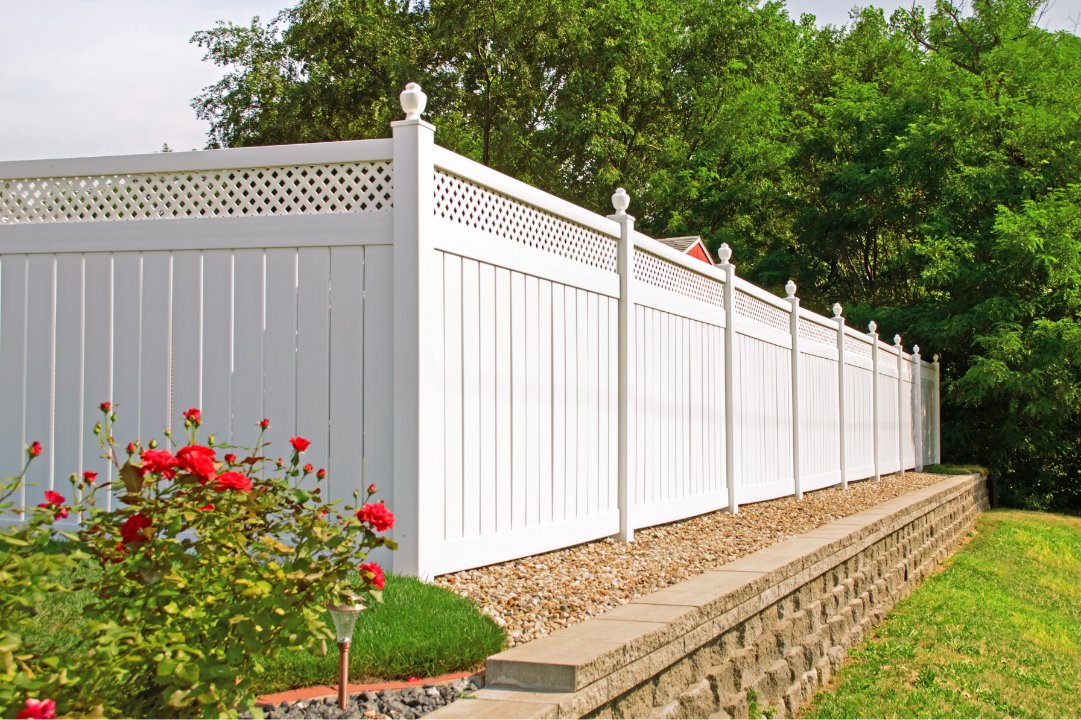
Vinyl (PVC) Fences: Low Maintenance with Long-Term Savings
Estimated cost: $25–$45 per linear foot
Material: PVC (vinyl panels)
Vinyl fencing is a top choice for homeowners who want long-term durability with minimal upkeep. It won’t rot, attract insects, or require repainting.
Why vinyl fences work well
- Extremely low maintenance
- Consistent appearance year-round
- Long lifespan (often 20–30+ years)
- Resistant to moisture and UV damage
Less obvious considerations
- Repairs usually require replacing full panels
- Lower-quality vinyl can crack in extreme cold
- Fewer customization options compared to wood
Best for: Busy homeowners, long-term ownership, clean and uniform designs
Chain Link Fences: Affordable, Practical, and Improving in Style
Estimated cost: $10–$20 per linear foot
Material: Galvanized or vinyl-coated steel
Chain link fencing is the most budget-friendly fencing option, especially for large properties or pet enclosures.
Why chain link fences work well
- Lowest upfront cost
- Durable and weather-resistant
- Ideal for pets and large yards
- Minimal maintenance
What many people don’t consider
- Black or green vinyl-coated chain link blends better into landscaping
- Privacy slats can be added later
- Landscaping dramatically improves curb appeal
Best for: Budget-conscious homeowners, pet containment, large yards
Aluminum & Metal Fences: Elegant Security Without Heavy Maintenance
Estimated cost: $20–$40 per linear foot
Materials: Aluminum, steel
Aluminum fencing offers the look of wrought iron without rust or extensive upkeep. It’s commonly used for front yards, pool enclosures, and decorative boundaries.
Why metal fences work well
- Durable and corrosion-resistant
- Meets many pool safety requirements
- Enhances curb appeal
- Allows visibility while defining space
Often overlooked
- Not ideal for privacy on its own
- Installation precision matters more than with wood
- Front-yard height restrictions may apply
Best for: Pool fencing, decorative security, open yard visibility
Composite Fences: Modern, Durable, and Eco-Friendly
Estimated cost: $30–$55 per linear foot
Material: Recycled wood fibers and plastic
Composite fencing blends the look of wood with the durability of plastic, offering a modern, low-maintenance alternative.
Why composite fencing works
- Resistant to rot, insects, and moisture
- Minimal maintenance
- Environmentally friendly materials
Hidden considerations
- Heavier materials may increase labor costs
- Color fading may occur with lower-quality brands
- Repairs often require specialized components
Best for: Modern homes, long-term durability, eco-conscious homeowners
Masonry & Concrete Fences: Maximum Privacy and Protection
Estimated cost: $40–$75+ per linear foot
Materials: Brick, stone, concrete
Masonry fencing offers unmatched durability, noise reduction, and security, but comes with higher upfront costs.
Why masonry fences stand out
- Extremely long lifespan
- Excellent sound barrier
- Strong visual and physical security
- Adds perceived property value
What many don’t think about
- Often requires permits
- Repairs are more complex
- Not ideal for all neighborhoods or HOAs
Best for: High-security needs, luxury properties, noise reduction
“Which Fence Is Right for You?” Decision Guide
Step 1: Identify Your Priority
- Privacy: Wood, Vinyl, Composite
- Low Maintenance: Vinyl, Aluminum, Composite
- Budget-Friendly: Chain Link, Pressure-Treated Wood
- Curb Appeal: Aluminum, Wood, Masonry
- Pets & Kids: Chain Link, Vinyl, Wood Privacy
Step 2: Consider Your Environment
- Hot or humid climates: Vinyl, aluminum, composite
- Cold climates: Thicker vinyl or metal
- Sloped yards: Wood or chain link
- Windy areas: Chain link or aluminum
Step 3: Match Fence to Use
| Situation | Best Fence Choice | Why |
|---|---|---|
| Backyard privacy | Wood or vinyl | Solid panels |
| Pool enclosure | Aluminum | Safety compliance |
| Large property | Chain link | Affordable coverage |
| Modern home | Composite or horizontal wood | Clean design |
| Noise reduction | Masonry | Sound barrier |
Final Thoughts: Choose the Fence That Fits Your Lifestyle
The best fence material isn’t just about price—it’s about how you use your property, your maintenance tolerance, and long-term value. A well-chosen fence enhances daily enjoyment, improves functionality, and protects your investment.
Homeowners who consider lifecycle cost, climate performance, and future needs often find greater satisfaction with their fencing choice—and avoid costly replacements sooner than expected.