Roof Age and Insurance Eligibility: What Homeowners and Buyers Need to Know
Roof age plays a far bigger role in homeowners insurance eligibility than most people realize. Whether you’re buying a home, renewing a policy, or deciding whether to replace a roof out of pocket, understanding how insurance companies evaluate roofs can prevent coverage delays, higher premiums, and last-minute repair demands.
This guide explains how roof age affects insurance eligibility, what insurers look for beyond what most homeowners notice, and how to make informed decisions that protect both your coverage and your finances.
Why Roof Age Matters So Much to Insurance Companies
From an insurance standpoint, the roof is one of the most important risk indicators on a home. It shields the structure from water intrusion, wind damage, and interior losses—some of the most frequent and expensive homeowners insurance claims.
Many insurance carriers consistently identify roof-related water intrusion and wind damage as two of the most common and costly losses, which is why roof age and roof condition receive such close attention during underwriting. When people ask, “How old can a roof be for insurance?” insurers are really evaluating how likely that roof is to fail during the policy term—not just its age on paper.
This is especially true in regions prone to storms, wind, or heavy rainfall, where roof performance directly impacts claim frequency.
Typical Roof Age Guidelines for Insurance Eligibility
Every insurance company has its own underwriting rules, but many follow similar age ranges:
- 0–10 years old: Rarely an issue for eligibility
- 11–15 years old: Often insurable, sometimes with documentation
- 16–20 years old: Commonly triggers inspections or coverage limitations
- 20+ years old: Frequently results in restricted coverage, non-renewal, or denial
A roof can appear functional to a homeowner and still fall outside insurance guidelines. This disconnect is one of the most common reasons buyers and homeowners run into unexpected insurance problems.
Roof Age vs. Roof Condition: What Insurers Actually Evaluate
One of the biggest misconceptions is that roof age alone determines insurance eligibility. In reality, insurers evaluate roof age and roof condition together—and condition can sometimes outweigh age.
Here are factors insurance companies look at that most homeowners never think to check:
Granule Loss on Shingles
Granules protect asphalt shingles from UV damage. Excessive granule loss signals advanced deterioration, even if leaks haven’t started yet.
Shingle Brittleness
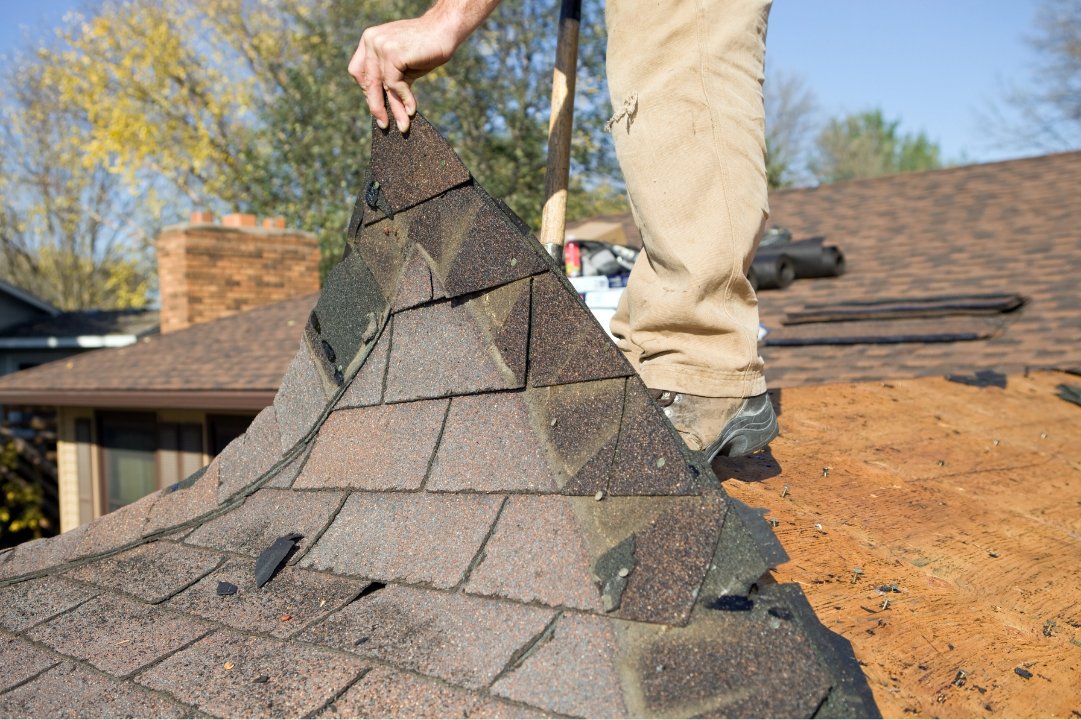
If shingles crack or snap when gently lifted, insurers view the roof as nearing the end of its usable life.
Soft Spots and Decking Integrity
Soft areas indicate moisture intrusion beneath the surface—one of the strongest predictors of future claims.
Repair Patterns
Multiple patches, mismatched shingles, or layered repairs suggest deferred maintenance and increase perceived risk.
Roof Design and Drainage
Low-slope or flat roofs are often scrutinized more closely due to water drainage concerns, regardless of age.
How Roof Material Changes Insurance Eligibility
Roof material plays a major role in how age is interpreted:
- Standard asphalt shingles: Closely monitored after 15–20 years
- Architectural shingles: Often viewed more favorably due to durability
- Metal roofs: Can remain insurable for decades if properly maintained
- Tile or slate roofs: Long-lasting but expensive to repair, increasing underwriting caution
- Flat roofs: Typically face stricter requirements due to pooling risks
This explains why two homes with similar roof ages can receive very different insurance outcomes.
Buying a Home? Why Roof Age Should Be a Top Priority
For buyers, roof age and insurance eligibility can directly affect whether a transaction moves forward smoothly or becomes delayed.
Older roofs can lead to:
- Insurance denial or limited coverage
- Mandatory roof replacement requests before closing
- Higher premiums or deductibles
- Policy exclusions that reduce future claim payouts
Smart buyers request:
- Proof of roof age or replacement dates
- Permits or transferable warranties
- Disclosure of past roof-related insurance claims
In many cases, negotiating roof replacement during the purchase is financially safer than absorbing the cost later under insurance pressure.
When Insurance Companies Require Roof Replacement
A common question homeowners ask is, “Will insurance make me replace my roof?” In some cases, yes.
This often occurs when:
- A renewal inspection flags deterioration
- Underwriting guidelines tighten regionally
- Claims history increases perceived risk
- Drone or third-party inspections identify hidden issues
Homeowners may receive a repair-or-replace notice with a firm deadline. Missing that deadline can result in non-renewal—even if no claim has ever been filed.
What Insurance Companies Rarely Explain Upfront
Insurance companies rarely alert homeowners when a roof is approaching underwriting limits. Most people only discover there’s an issue during policy renewal, after a claim, or while trying to insure a newly purchased home—when timelines are tight and options are limited.
Understanding how roof age affects insurance eligibility ahead of time gives homeowners flexibility, rather than forcing rushed decisions under pressure.
Paying Out of Pocket vs. Waiting: A Strategic Comparison
Replacing a roof proactively often provides more control and long-term value.
Replacing on your own timeline may:
- Preserve full roof coverage
- Reduce insurance premiums
- Improve resale appeal
- Prevent denied or limited claims
Waiting too long may lead to:
- Actual cash value vs replacement cost roof coverage, which significantly reduces claim payouts
- Coverage exclusions for wind or hail
- Forced, rushed replacement decisions
Roof age is one of several factors that impact home insurance premiums, often influencing deductibles, exclusions, and long-term insurability.
Roof Inspections and Modern Insurance Underwriting
Insurance inspections today frequently rely on:
- Drone imagery
- Third-party roof reports
- Exterior-only evaluations
These inspections assess risk, not livability. Issues can be flagged even if homeowners are unaware of them. Proactive maintenance and documentation help prevent surprises during underwriting reviews.
Roof Age & Insurance: A Quick Decision Guide
- Roof under 10 years: Typically no insurance issues
- Roof 10–15 years: May require inspection or proof of condition
- Roof 15–20 years: Expect underwriting review or coverage limits
- Roof 20+ years: Replacement often required for full eligibility
This quick reference helps homeowners and buyers anticipate insurance expectations before they become urgent.
Who This Information Matters Most For
This guidance is especially important for:
- Buyers purchasing older homes
- Homeowners in storm-prone or coastal regions
- Anyone planning renovations in the next 3–5 years
- Owners weighing whether to replace a roof out of pocket
Understanding roof age and insurance eligibility early allows for smarter planning and fewer last-minute surprises.
Frequently Asked Questions About Roof Age and Insurance
How old is too old for a roof for homeowners insurance?
Many insurers begin restricting coverage once a roof reaches 15–20 years old, depending on condition and material.
Can you get homeowners insurance with a 20-year-old roof?
Sometimes, but often with inspections, limited coverage, or higher premiums.
Does roof condition matter more than roof age?
In many cases, yes. A well-maintained roof may remain insurable longer than a neglected newer one.
Will insurance cover roof damage on an older roof?
Coverage may be limited to actual cash value or exclude certain perils.
How does an insurance company verify roof age?
Through inspections, drone reports, permits, warranties, or third-party data sources.
Final Thoughts
Roof age is not just a maintenance detail—it’s a major factor in insurance eligibility, pricing, and claim outcomes. Insurance companies evaluate subtle indicators of risk that most homeowners never notice, which is why understanding these factors early matters.
Making roof decisions proactively—whether during a home purchase or before insurance forces the issue—gives homeowners far more control over coverage, cost, and long-term protection.